 DarkOps
Content by DarkOps
Why so many people are starting faceless YouTube channels with AI, and where most of them get stuck
This article is by DarkOps, the company that makes the software it mentions.
"Faceless youtube channel" has become one of the biggest searches about making money on YouTube. According to vidIQ, the term gets about 2.1 million searches a month, led by India (22%), the US (15%), Pakistan (9%) and the UK (4%). "Youtube automation" adds another 2.6 million, and in the last month alone "ai faceless youtube channel" grew 24%.
The promise is simple: run YouTube channels without showing your face, with AI doing the heavy lifting. Reality for the people who try is more complicated.
The first wall: too many tools
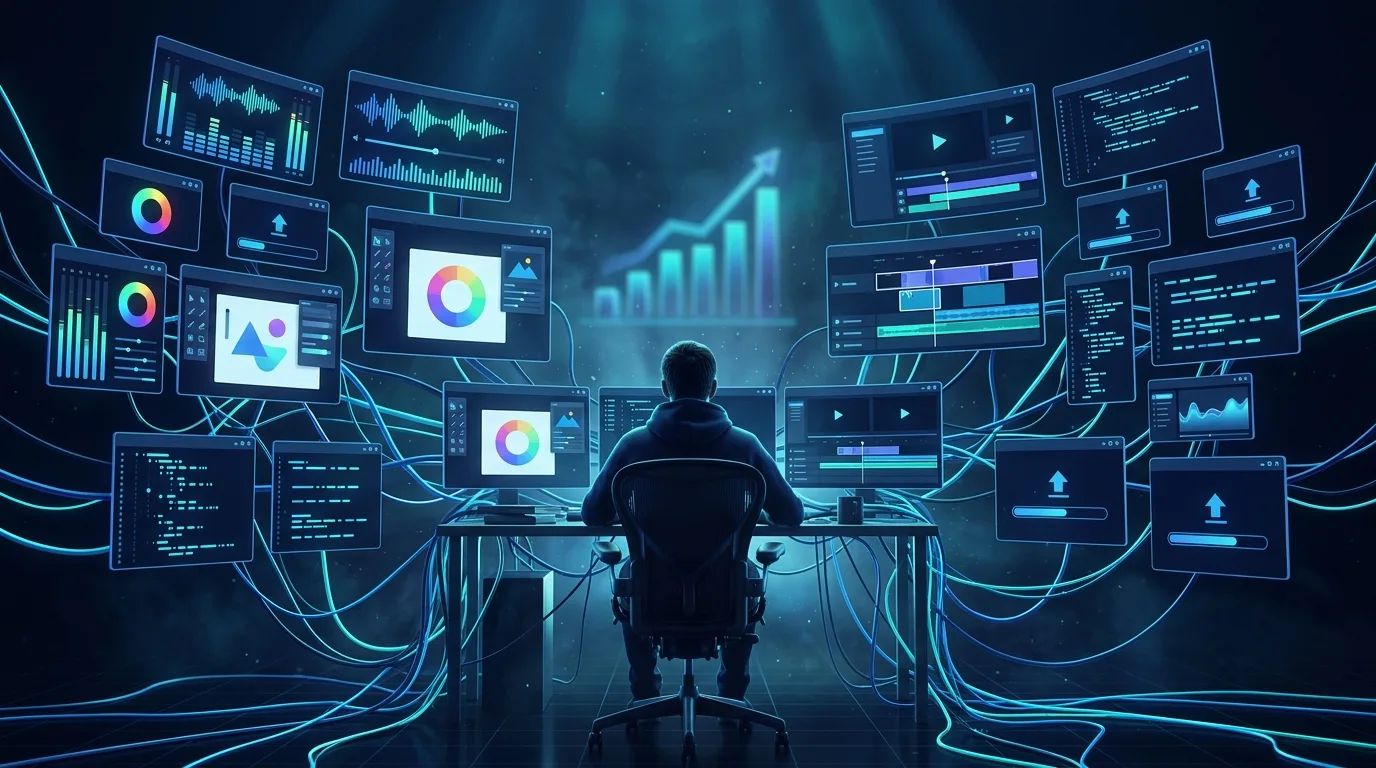
A faceless channel video goes through topic, script, voiceover, music, scenes, editing, thumbnail and publishing. Beginners piece this together with one tool per stage: a chatbot for the script, a voice site, another for music, an image generator, an editor, a stock library. That is hours per video, most of it spent moving files from one place to another.
The result shows up around the third or fourth channel. The person isn't short on ideas, they just can't keep up with production. Consistency drops, and on YouTube an irregular channel stops being recommended.
The second wall: the rule that sinks lazy channels
In July 2025 YouTube started calling mass produced or repetitive videos inauthentic content. In practice, channels that repeated the same video and only changed the title stopped being monetized.
That split faceless channels into two kinds: the ones that dump identical videos and the ones that use AI to produce better, with an original script, good narration, careful visuals and disclosed AI use. The second kind keeps growing.
What growing channels do differently
- They pick the niche with data. They look at how much the topic is searched and how many channels compete, instead of going by taste.
- They model new channels that are already growing. They repeat the format the algorithm is recommending right now, with their own content.
- They care about what holds attention: the hook, the voice and the thumbnail.
- They measure and adjust. Retention and CTR tell them what to repeat.
None of this is a secret. The hard part is doing all of it, every week, across several channels.
Where AI really helps
DarkOps was born from that bottleneck. Instead of one more tool, it brings the whole process into one place, with an AI agent, the Operator, that does the grunt work: it studies the niche numbers, models the reference channel and produces the script, voiceover, music, scenes and edit. It uses the AI accounts you already have, with no markup on what they cost.
You keep the decisions: you approve the script, the voice and the publishing. Nothing goes live without your permission, and every AI made video is disclosed as such.
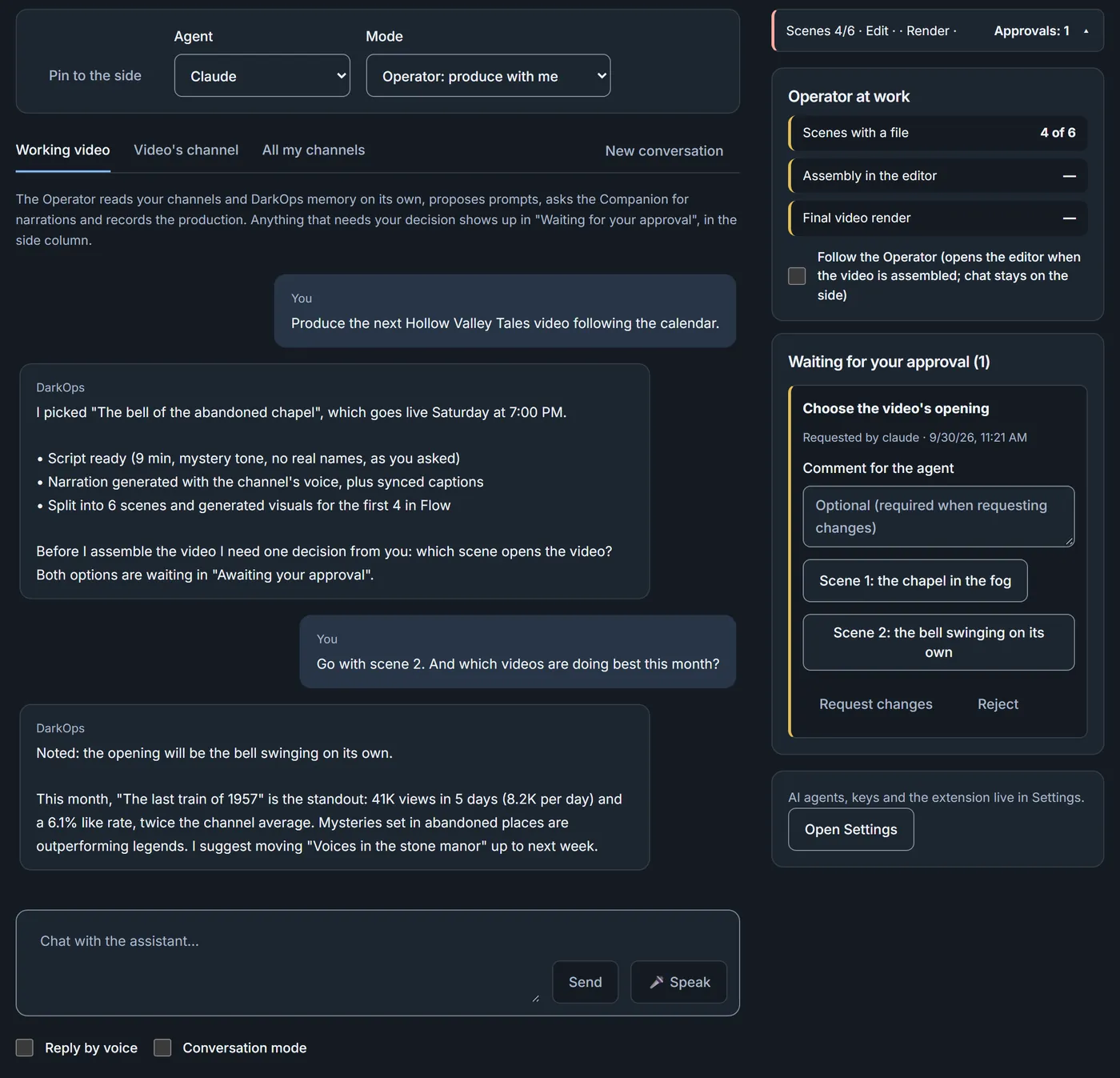
The idea is to go from barely keeping up with 3 channels to running 10 with the same effort. You can try it for 7 days with everything unlocked and cancel before day 8 without paying anything.
Do it all in DarkOps
The Operator studies the niche, models your reference channel and produces the script, voiceover, music, scenes and edit with your own AI accounts. You just approve.
Try 7 days freeCancel before day 8 and you pay nothing.